
Understanding Levels of Care: How to Make the Right Choice for Your Loved One
By: Hey Woman Podcast | Episode 21: Caregiving with Confidence
One of the Hardest Caregiving Decisions Families Face
Caregiving is filled with difficult decisions, but one question often causes the most stress:
What level of care does my loved one actually need?
Many families don’t start researching care options until they’re already facing a crisis—a fall, a hospitalization, a caregiver emergency, or a sudden decline in health.
By then, decisions feel rushed and overwhelming.
In Episode 21 of the Hey Woman Podcast, Julie and Cortney break down the different levels of care available and explain why understanding your options before they’re needed can make all the difference.
“You can’t contingency plan in an emergency.”
Why This Conversation Matters
Most caregivers assume they’ll figure things out when the time comes.
The problem is that caregiving decisions are rarely made under ideal circumstances.
They’re often made when:
- Emotions are high
- Time is limited
- Information feels overwhelming
- Family members disagree
- Options feel unclear
Planning ahead gives families something incredibly valuable:
Choice.
The more you understand your options before a crisis, the better equipped you’ll be to make confident decisions later.
What Is Respite Care—and Why More Families Should Use It
One of the most overlooked caregiving resources is respite care.
Respite care provides temporary support so caregivers can rest, recover, travel, handle personal responsibilities, or simply take a break from daily caregiving demands.
Respite care may include:
- A short stay in a care community
- Temporary in-home care
- Assistance from professional caregivers
- Support from family members or volunteers
Why Respite Care Matters
Respite care can:
- Prevent caregiver burnout
- Provide a safe environment for a loved one
- Offer caregivers time to recharge
- Help families test-drive a facility before making a long-term decision
The Caregiver Takeaway
Many caregivers view respite care as a last resort.
This episode challenges that perspective.
“Respite care is not failure—it’s strategy.”
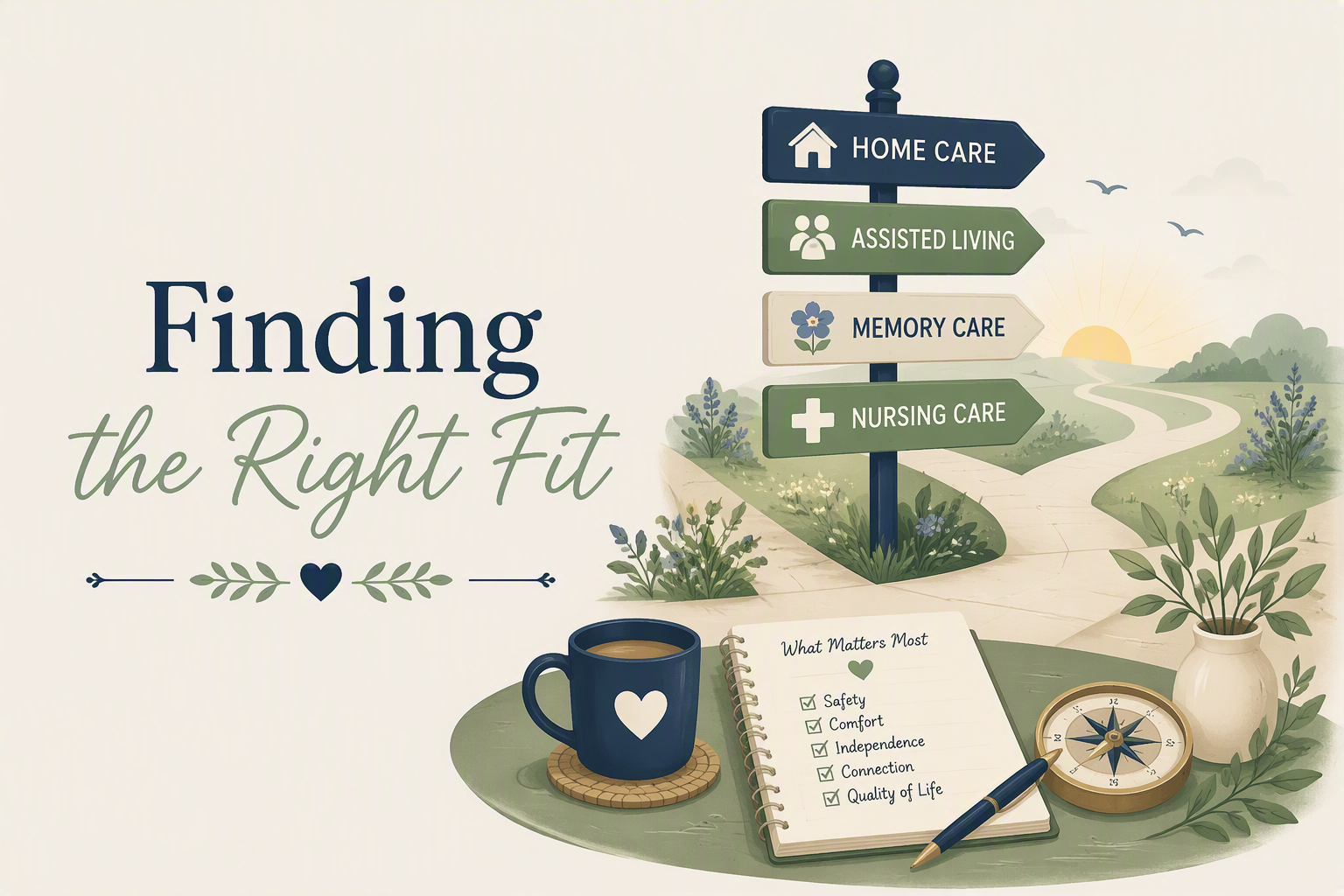
Understanding the Different Levels of Care
One of the biggest sources of caregiver confusion is that there isn’t just one type of senior care.
Each level serves a different purpose.
Independent Living
Independent living communities are designed for active older adults who want social opportunities, convenience, and community without significant caregiving support.
Residents generally live independently while enjoying amenities and social engagement.
Assisted Living or Personal Care
Assisted living provides support with everyday activities while allowing residents to maintain as much independence as possible.
Services often include:
- Meals
- Medication assistance
- Personal care support
- Housekeeping
- Activities and social opportunities
This option is often appropriate for individuals who need some help but do not require intensive medical care.
Memory Care
Memory care communities provide specialized support for individuals living with dementia or Alzheimer’s disease.
These communities typically offer:
- Enhanced supervision
- Structured routines
- Secure environments
- Dementia-specific programming
Memory care focuses on both safety and quality of life.
Nursing Homes or Skilled Nursing Facilities
Nursing homes provide the highest level of medical support outside of a hospital setting.
Care often includes:
- Skilled nursing services
- Medical monitoring
- Rehabilitation services
- Assistance with daily living
This level of care is often appropriate for individuals with complex medical needs.
Focus on Needs, Not Labels
One of the most important lessons from this episode is that care categories aren’t always perfectly defined.
Some assisted living communities provide more support than others.
Some individuals with dementia may thrive in assisted living while others require memory care.
The key is not focusing on the label.
The key is focusing on the person’s needs.
Questions to Ask
- What support does my loved one require today?
- What support are they likely to need in the future?
- What environment will help them thrive?
- What level of independence do they want to maintain?
How to Choose the Right Facility
Waiting until a crisis occurs often limits options.
Whenever possible, visit communities before they’re needed.
What Caregivers Should Do
Visit facilities early and pay attention to the details.
Consider:
- Touring during meal times
- Observing staff interactions
- Attending community events
- Asking questions about daily routines
- Talking with current residents and families
What to Look For
Pay attention to:
- Social opportunities
- Staff engagement
- Cleanliness
- Safety measures
- Opportunities for independence
- Overall atmosphere
The environment should feel supportive, respectful, and aligned with your loved one’s preferences.
The Reality of Crisis Decisions
Without advance planning, families often find themselves making major decisions from a hospital room.
This can lead to:
- Rushed choices
- Limited facility availability
- Increased family stress
- Fewer opportunities to compare options
“Preparation = Protection.”
The more preparation families do ahead of time, the more flexibility they typically have when a decision is needed.
Understanding How Long-Term Care Is Paid For
One of the most confusing aspects of caregiving is figuring out how care will be financed.
Many families are surprised to learn that the most common assumptions about payment are often incorrect.
Medicare
Medicare generally covers acute medical care and limited short-term rehabilitation services.
It typically does not pay for ongoing long-term custodial care.
This is one of the most misunderstood aspects of caregiving planning.
“Medicare will not save you—plan for long-term care separately.”
Medicaid
Medicaid may help pay for long-term nursing home care for eligible individuals.
However, eligibility requirements and financial rules apply.
Because these rules can be complex, planning ahead is often beneficial.
Veterans Benefits
Certain Veterans and surviving spouses may qualify for programs that help offset long-term care expenses.
Eligibility depends on service history and program requirements.
Private Insurance
Long-term care insurance and certain life insurance riders may help cover caregiving costs.
Coverage details vary significantly by policy.
Private Pay Resources
Many families use personal savings, investments, or other financial resources to pay for care.
While this approach provides flexibility, costs can accumulate quickly without proper planning.
The Caregiver Takeaway
Understanding payment options early gives families more choices and fewer surprises.
Why Every Family Needs a Contingency Plan
Even if everything seems manageable now, circumstances can change quickly.
Consider:
- Caregiver illness
- Hospitalizations
- Falls
- Unexpected medical diagnoses
- Family emergencies
Without a contingency plan, families may find themselves making decisions under pressure.
Planning ahead creates stability when unexpected events occur.
Five Steps You Can Take Today
1. Gather Important Financial Documents
Create a file containing:
- Insurance policies
- Financial records
- Estate planning documents
- Benefit information
Being organized makes future decisions easier.
2. Research Local Care Options
Learn what assisted living, memory care, nursing homes, and respite services exist in your area.
Even basic familiarity can reduce stress later.
3. Schedule a Facility Tour
Seeing a community before you need it helps eliminate uncertainty and allows families to compare options thoughtfully.
4. Identify Key Decision-Makers
Determine who will be involved in major caregiving decisions.
Clear communication today can prevent conflict later.
5. Explore Respite Care Resources
Don’t wait until you feel overwhelmed.
Know what support options are available before burnout occurs.
Key Lessons From This Episode
There Is No One-Size-Fits-All Solution
Different levels of care exist because different people have different needs.
Respite Care Is a Valuable Caregiving Tool
Taking a break isn’t weakness.
It’s part of a healthy caregiving strategy.
Financial Planning Matters
The sooner families understand how care is funded, the more options they often have.
Caregiver Well-Being Matters Too
Supporting the caregiver is an important part of supporting the person receiving care.
Preparation Creates Confidence
The more informed your family is, the less likely you’ll be forced into rushed decisions.
“The best time to plan is before you need it.”
Listen & Learn More
Listen to the Hey Woman Podcast for real-life caregiving stories, practical guidance, and family-centered conversations.
Visit Planning & Protecting for caregiver resources, educational tools, and support for families navigating assisted living, nursing home care, memory care, and long-term care planning.