
Memories and Mementos: How Families Can Plan for the Stuff That Matters
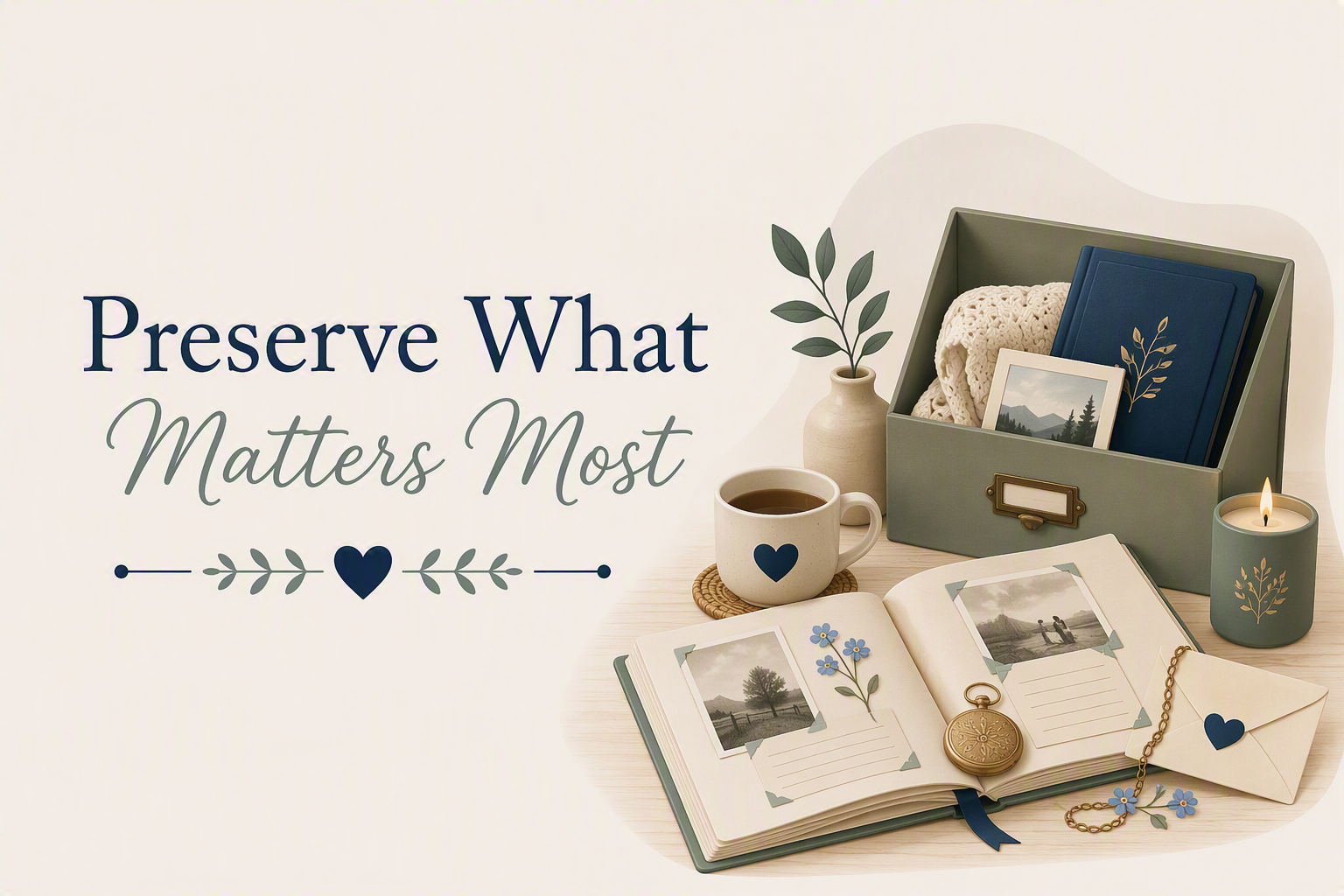
By: Hey Woman Podcast | Episode 13: Memories and Mementos
Why “Stuff” Can Be Harder Than Money
When families think about long-term care planning, they often focus on legal documents, financial accounts, insurance policies, and healthcare decisions.
But there is another part of planning that can be surprisingly emotional:
The stuff.
The furniture.
The photo albums.
The jewelry.
The handwritten notes.
The keepsakes tucked away in drawers and closets.
In Episode 13 of the Hey Woman Podcast, Julie and Cortney explore why personal belongings often carry more emotion than money and how families can begin conversations about sentimental items before a crisis, move, or loss forces difficult decisions.
This episode reminds us that the objects we keep are rarely just objects.
They often represent memories, relationships, family history, and identity.
“Stuff matters because it carries stories, identity, and family memory.”
Why Personal Belongings Matter So Much
Most families assume dividing personal property will be simple.
Then reality arrives.
What appears to be an ordinary piece of furniture may represent decades of memories.
A handwritten note may be worth more emotionally than any financial account.
A favorite cookbook, piece of jewelry, holiday decoration, or family photograph can carry incredible significance.
Why This Happens
Objects often become connected to:
- Family traditions
- Childhood memories
- Personal stories
- Important relationships
- Life milestones
- Shared experiences
The value isn’t always financial.
It’s emotional.
The Long-Term Care Planning Takeaway
Understanding the emotional importance of belongings helps families approach these conversations with greater sensitivity.
Why Waiting Creates More Stress
Many families avoid talking about personal belongings because the conversation feels uncomfortable.
They assume there will be time later.
Unfortunately, major life events can force decisions quickly.
Examples include:
- A move to assisted living
- Downsizing
- A health crisis
- A death in the family
- Selling a home
Without prior conversations, families often find themselves making decisions while navigating grief, stress, or time constraints.
Why This Matters
The more planning that occurs before a crisis, the fewer rushed decisions families typically face later.
Asking Family Members What Matters
One of the practical suggestions from this episode is to have conversations before decisions become urgent.
This doesn’t mean assigning every item immediately.
It simply means learning what holds meaning.
Questions might include:
- Is there anything special you would want someday?
- Which items carry important memories?
- Are there family heirlooms people value?
- What stories are connected to certain belongings?
The Caregiver Takeaway
These discussions work best when they are handled with care and curiosity rather than urgency.
The Benefits of Lifetime Gifting
Another topic explored in this episode is lifetime gifting.
Many people assume that meaningful belongings should remain untouched until after death.
But sometimes there are benefits to giving special items away while their owner is still living.
This allows people to:
- Share family stories
- Explain why an item matters
- Witness it being enjoyed
- Reduce future confusion
- Create meaningful memories
Why This Matters
Receiving a treasured item while a loved one is still alive often creates opportunities for connection that are missed when everything is handled after loss.
Be Careful About Making Quick Decisions During Grief
One of the strongest messages in this conversation is that families should avoid rushing to clear out belongings immediately after a loss whenever possible.
During grief, emotions are running high.
People may feel pressure to:
- Empty a house quickly
- Donate items immediately
- Make permanent decisions
Those choices can sometimes create regret later.
The Long-Term Care Planning Takeaway
There is rarely harm in slowing down.
There can be harm in moving too quickly.
Giving yourself permission to pause can make future decisions easier.
Preserving Stories Is Just as Important as Preserving Objects
One important question raised by this episode is:
What happens when the story behind an item disappears?
A family heirloom may seem less meaningful if no one knows its history.
This is why documenting stories can be incredibly valuable.
Examples include:
- Recording family memories
- Labeling photographs
- Writing down the history of heirlooms
- Creating digital archives
- Recording conversations with loved ones
Why This Matters
Sometimes the story is more valuable than the object itself.
The Power of Photos and Digital Preservation
Not every meaningful item needs to stay in physical form.
This episode encourages families to consider digitizing important memories when appropriate.
Possible projects include:
- Scanning photographs
- Creating digital photo albums
- Saving letters and notes
- Recording oral histories
- Photographing meaningful keepsakes
Digital preservation can help protect family memories while reducing the challenges of storing large collections of belongings.
How Planning Helps Prevent Family Conflict
Many family disagreements aren’t really about possessions.
They’re about uncertainty.
When expectations are unclear, assumptions often fill the gap.
Written guidance can be incredibly helpful.
This may include:
- Personal property lists
- Written instructions
- Family discussions
- Documentation of sentimental items
- Professional guidance when needed
“Written lists, photos, and professional guidance help avoid family conflict.”
The Caregiver Takeaway
Clarity often prevents misunderstandings before they begin.
Four Practical Steps Families Can Take Today
1. Create a Personal Property List
Identify belongings that carry emotional significance and document who may eventually receive them.
2. Start Conversations Before a Crisis
Ask family members which items matter to them while everyone has time to talk openly and thoughtfully.
3. Preserve the Stories
Digitize photos, record memories, and document the history behind meaningful objects.
Future generations will appreciate it.
4. Consider Lifetime Gifting
When appropriate, allow loved ones to enjoy and appreciate meaningful items while you’re still able to share the story behind them.
Long-Term Care Planning Is About More Than Healthcare
This episode serves as an important reminder that long-term care planning extends beyond legal and financial planning.
Families often focus on:
- Powers of Attorney
- Estate documents
- Long-term care costs
- Healthcare decisions
Those are all important.
But planning also includes preserving legacy, memories, relationships, and the things that make a family unique.
Because sometimes the most difficult decisions aren’t about bank accounts.
They’re about Grandma’s recipe box.
Dad’s favorite chair.
Or a handwritten note tucked inside a drawer.
Listen & Learn More
Listen to the Hey Woman Podcast for real-life caregiving stories, practical guidance, and family-centered conversations.
Visit Planning & Protecting for resources, free downloads, and support connecting with professionals who understand caregiving, aging, long-term care planning, and family legacy preservation.